Why choice matters
A doorbell, unfamiliar voices, new scents and extra movement can quickly change your pet's familiar environment. The goal is not to make them socialise. It is more helpful to give them a choice: approach, move away or rest in a safe place.
1. Prepare a quiet retreat in advance
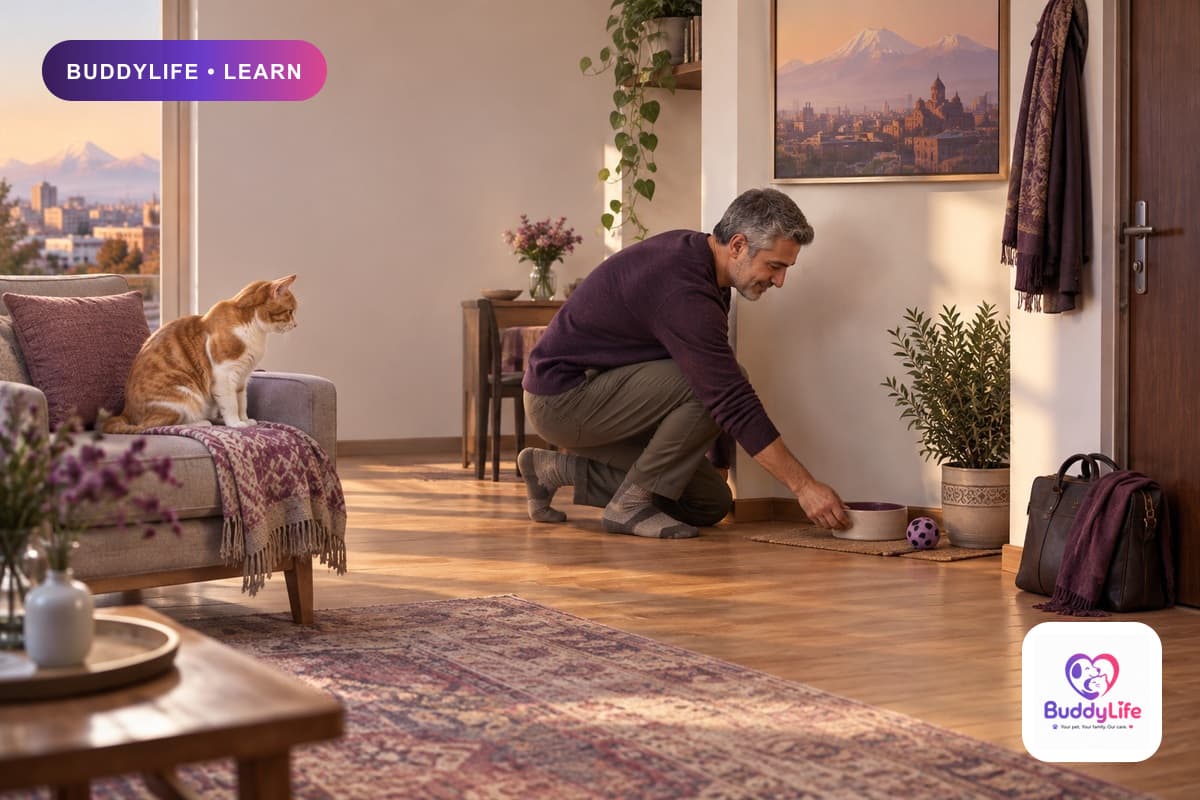
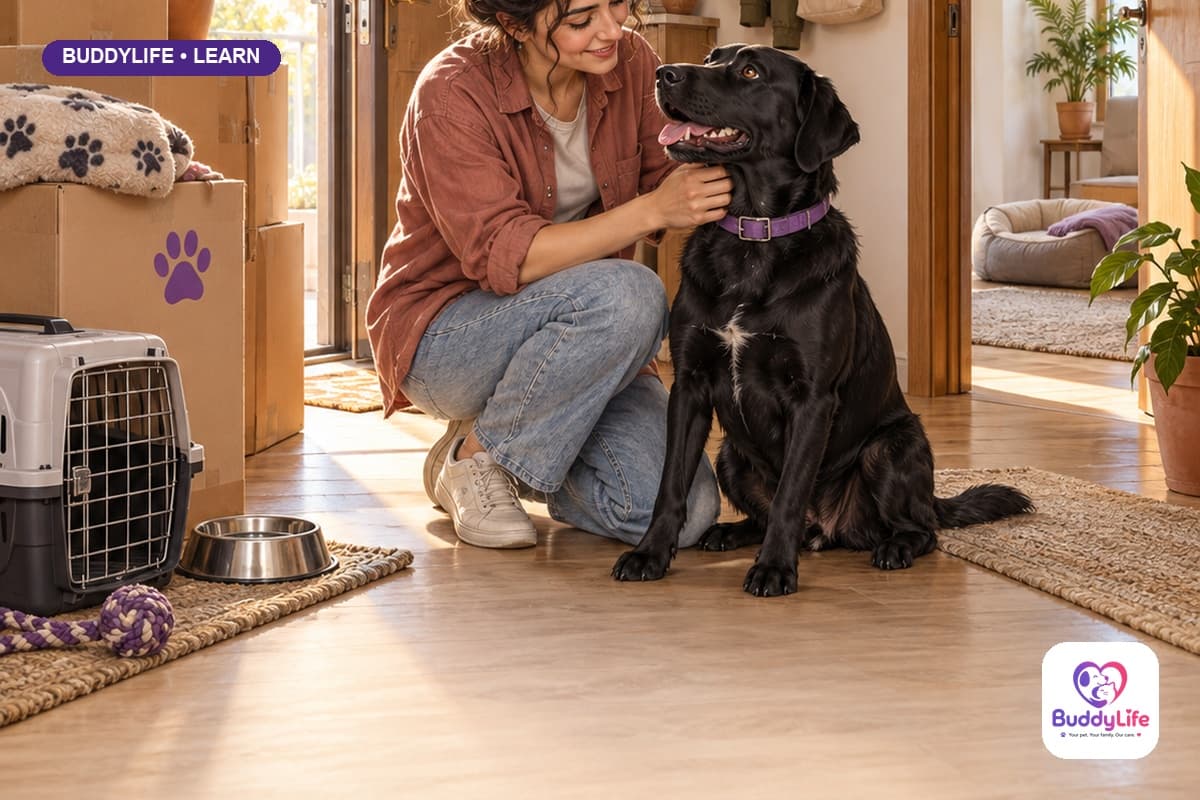
Choose a calm area and add your pet's familiar bed or blanket, water and a favourite toy. A cat may appreciate a high perch or open box where they can observe without becoming the centre of attention. Keep a dog's resting place away from busy walkways.
2. Keep arrivals calm
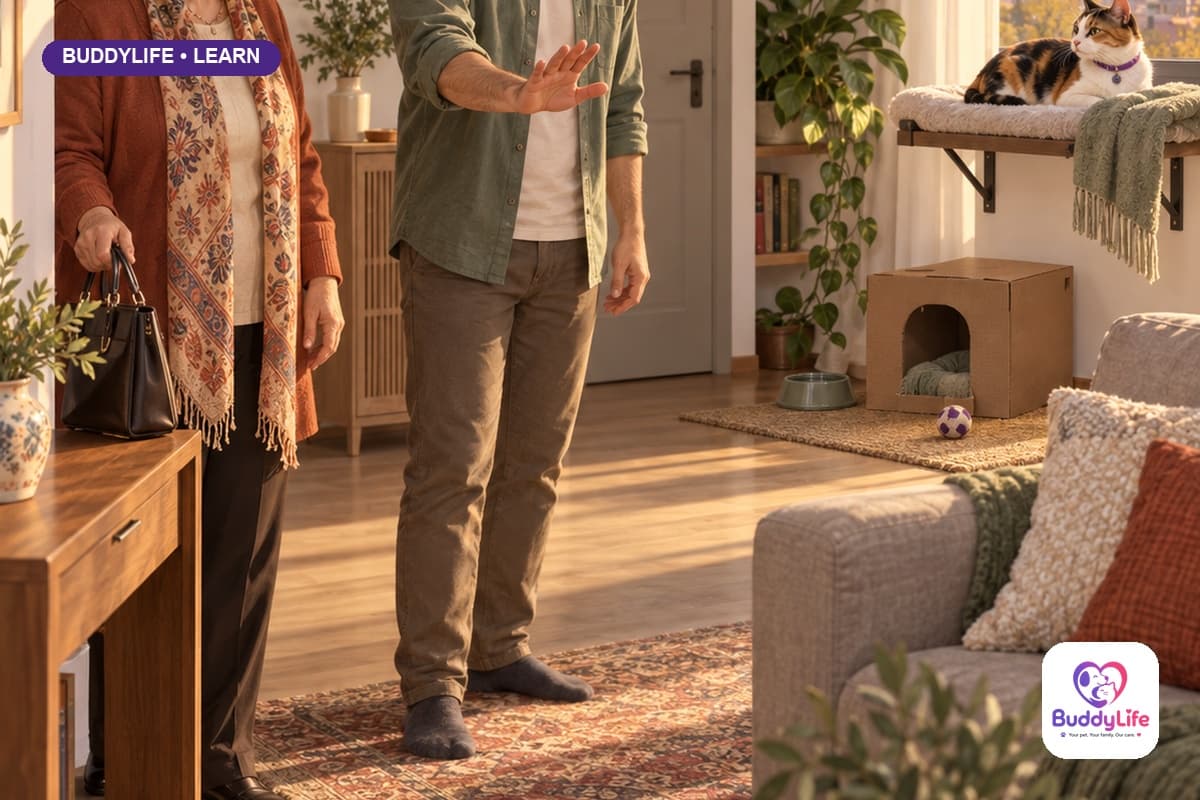
Ask guests to enter without loud greetings and not gather around your pet. If the doorbell is difficult for your pet, give them time to move to their retreat before opening the door. Keep the route to that space clear.
3. Give guests one simple rule
Let the pet make the first move. Guests should not call, stare, pick up or follow an animal that moves away. Sitting calmly and turning slightly sideways is usually less pressuring than approaching directly. Always supervise interactions between children and pets.
4. Preserve the usual routine
When possible, keep normal feeding, walking and rest times. A familiar routine helps communicate that a visit has not changed the entire day. Do not move food and water into the busiest part of the room.
5. Respect your pet's choice
If your pet hides or leaves, do not bring them out just for an introduction. If they approach voluntarily, keep the interaction brief and calm. Sometimes success simply means your pet can remain relaxed in their chosen space.
When to seek help
If fear is intense, behaviour changes persist or your pet does not return to their usual routine, contact a veterinarian or qualified animal behaviour professional.
This material provides general educational information and does not replace individual veterinary advice, diagnosis, or treatment.