What to plan in advance
Moving day changes familiar sounds, scents, people’s movement and the normal routine. Decide in advance where your pet will stay during the busiest part of the move, what they will need in the first few hours and which space they will explore first in the new home.
1. Choose a safe space in both homes
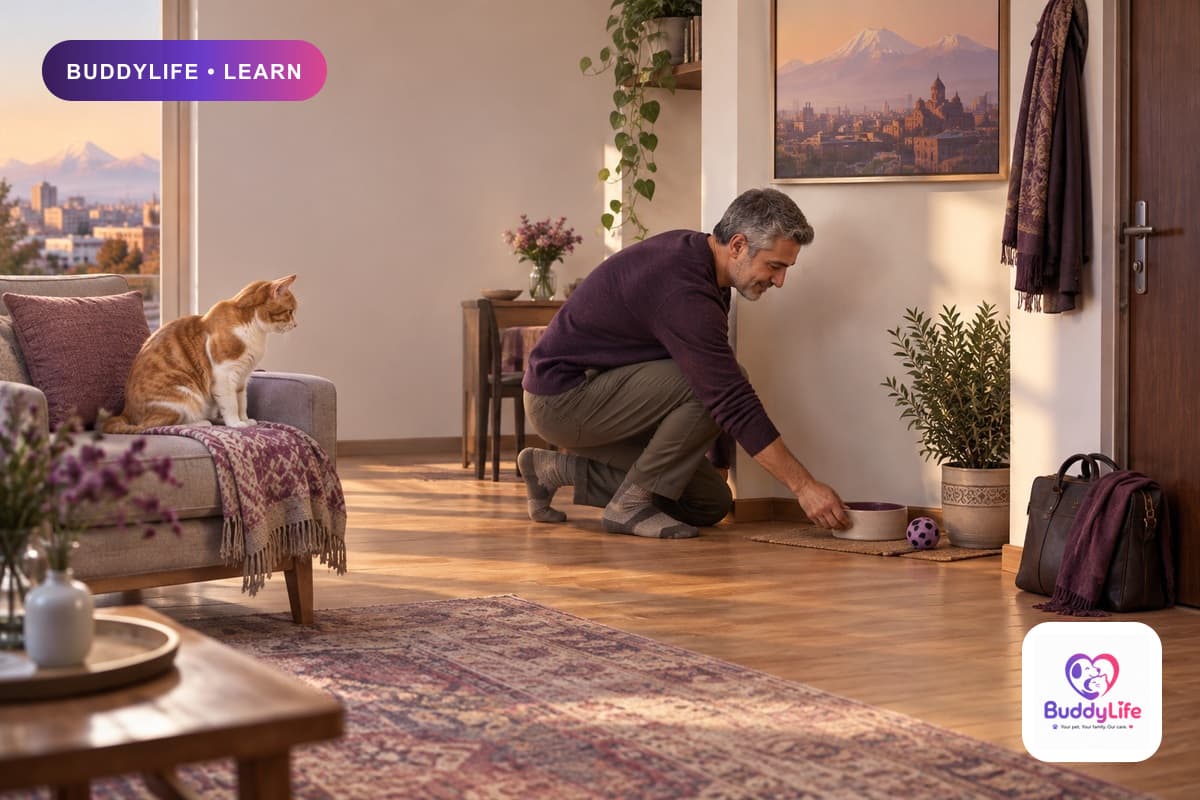
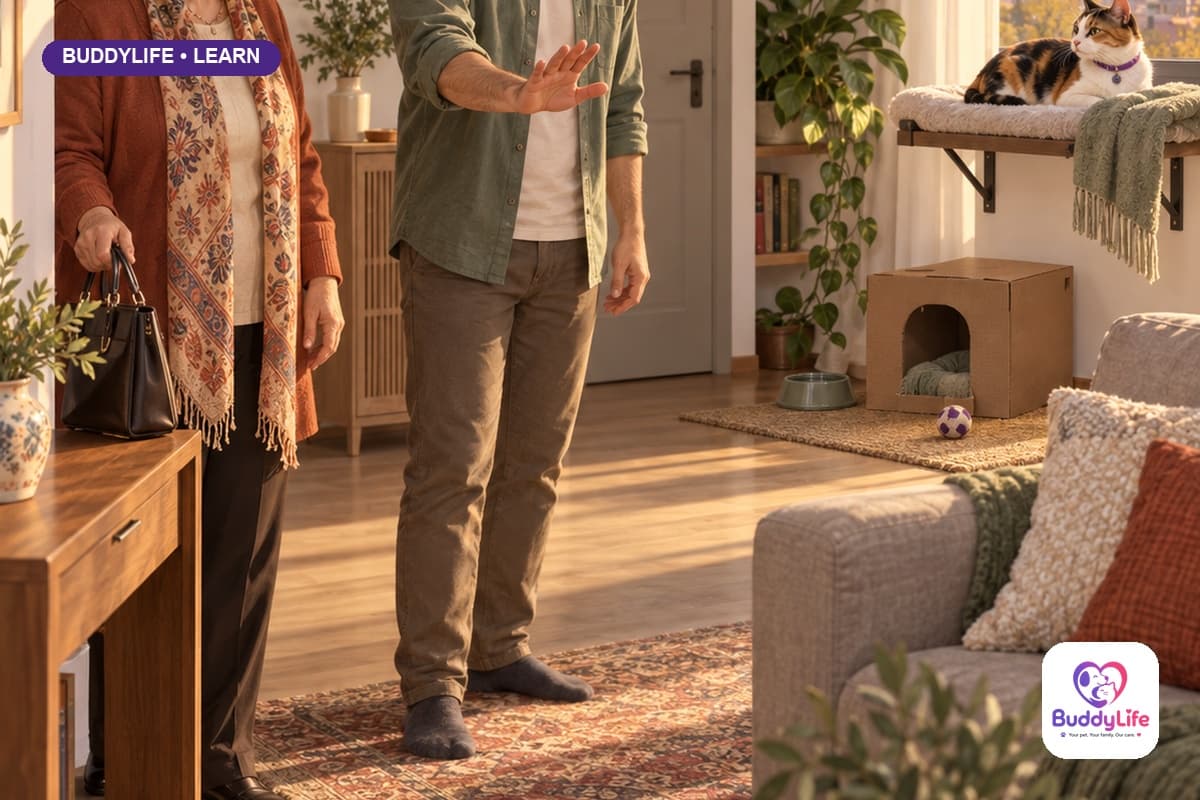
Before heavy packing begins, choose one quiet room in the current home and one in the new home. Add a familiar bed or blanket, water and essential supplies. Tell family members and movers clearly that this door must remain closed.
2. Pack a separate first-day bag
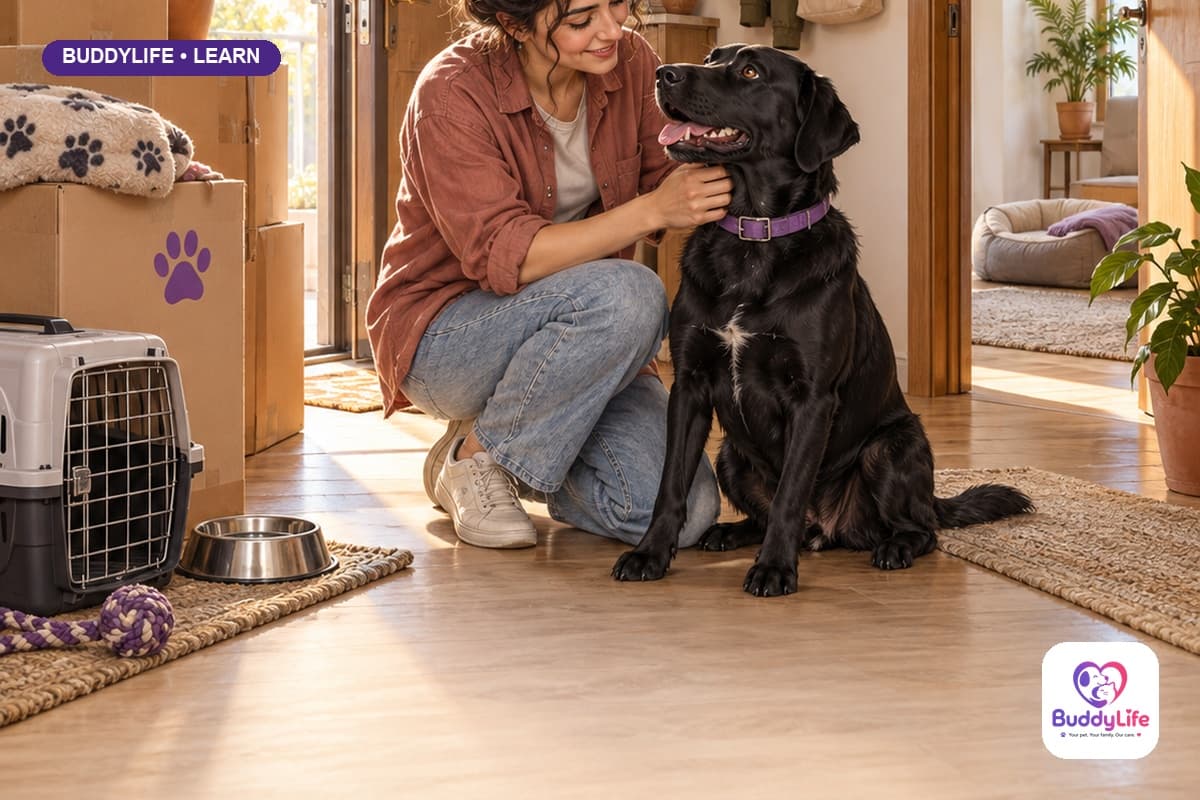
Keep water, food, bowls, a lead or secure carrier, cleaning supplies, a familiar toy or blanket and necessary documents together. If your pet takes professionally prescribed medication, keep it with the confirmed instructions.
3. Give one person clear responsibility
While doors are open and people are moving in and out, keep your pet in the closed quiet room or with a trusted caregiver. Use a sturdy species-appropriate carrier or secure restraint for transport. Never leave a pet unattended in a closed vehicle.
4. Plan the journey around your pet
Think ahead about water, rest and necessary stops. Keep dogs on lead and away from moving traffic during breaks. Open a cat carrier only inside a closed, secure space. If your pet struggles with travel or has specific care needs, ask your veterinarian for advice before the journey.
5. Start with one quiet room in the new home
Set it up before your pet arrives. Do not open the whole home immediately; let your pet explore at their own pace and keep access to the quiet retreat. Add a hiding place and elevated option for a cat, and a resting place away from busy walkways for a dog.
6. Keep the familiar rhythm for the first few days
When possible, keep usual feeding, walking, play and rest times. Avoid changing food, sleeping arrangements and every household rule at once. Familiar belongings and a predictable rhythm make the new environment easier to understand.
7. Update essential details
If your address or phone number changed, update the details linked to your pet’s identification. Keep verified contact details for your usual veterinarian and a practice near the new home. Do not publish personal details or documents in a public Story or open link.
This material provides general educational information and does not replace individual veterinary advice, diagnosis, or treatment.